

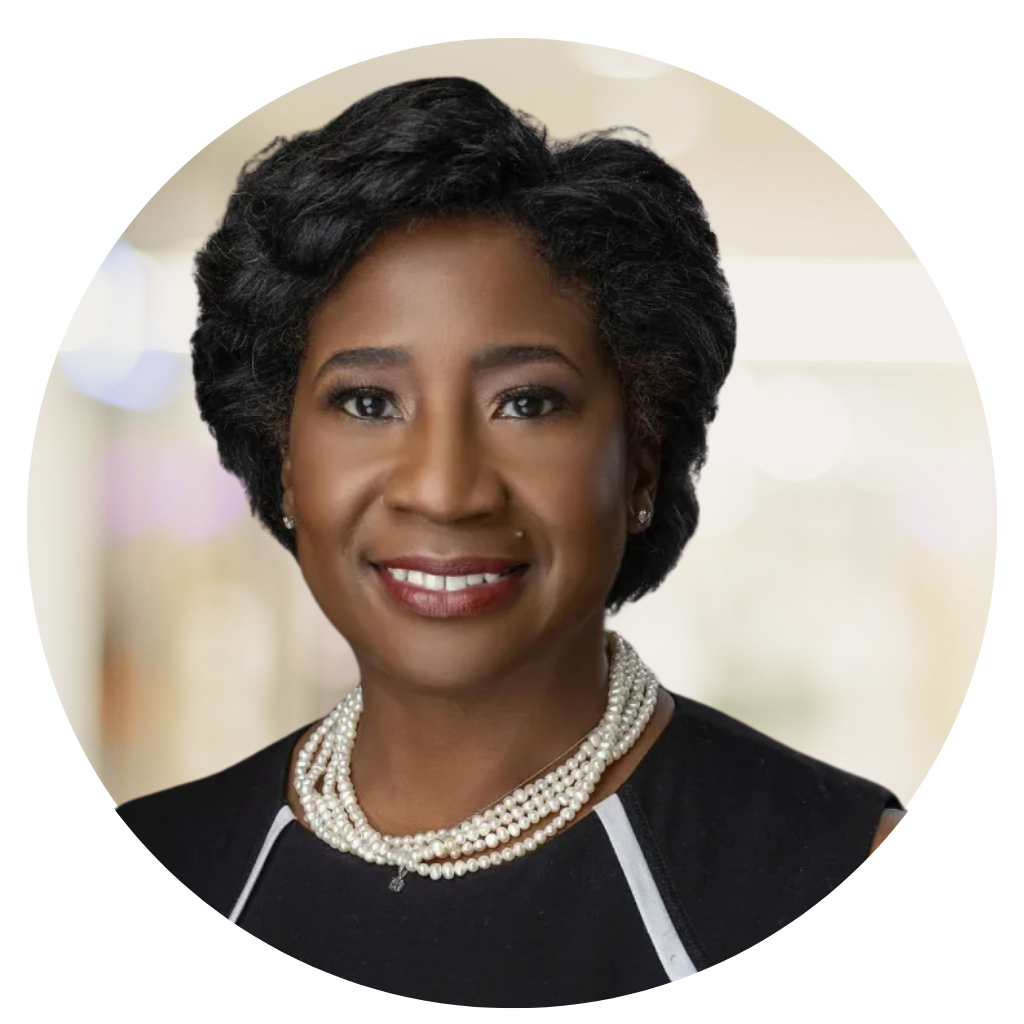
50% of people in the U.S. don’t have an estate plan,” says Aimee Griffin, a Maryland attorney and civil rights activist. “And in the Black community, that drops to 30%. Often, each generation has to start over when it comes to acquiring property,” eroding this foundation for intergenerational wealth.“Having real property is THE real opportunity for the next generation,” she continued, concluding, “The greatest reality for everyone is an economic one.
THE FIRST LINE OF DEFENSE: HAVE SOMETHING IN PLACE.
“I worked with a business owner to build his company’s capacity,” Aimee recounted. “But when he died with nothing in place, his business was dismantled in a ‘fire sale.’” She watched as a lifetime of work disappeared.
Seeing the dire need in communities of color for financial and estate planning education, Griffin returned to law school for a certificate in estate planning and founded the Association of Black Estate Professionals.
“Property appreciates, money evaporates if we don’t have a strategy. If we can avoid probate and be thoughtful in what we do, we can leave behind a legacy that builds for generations,” says Aimee.
When no planning is done, a deceased person’s property and assets go into probate, which is the legal process that distributes them. It is a time-consuming process, and the cost can be significant.
Additionally, before property can be distributed, debts the deceased person left behind must be paid. If there isn’t sufficient cash to do so, assets such as a house will be sold to pay the debt. Once creditors are satisfied, what remains is distributed based on who your local laws deem the default beneficiary, often the spouse or next of kin.
Often, a Will is not enough.

“A family member had a will in place when he passed, but now it’s a big mess between his children and new wife,” recalls Marcia Griffin, Founder and CEO of HomeFree-USA, an organization that helps diverse communities purchase and keep their homes, “His estate is going to probate. It will take at least 4-6 years and upwards of ten thousand dollars to settle.”
“What people need is a trust,” Marcia concludes. “Everyone talks about a will, but there are problems with a will.” We must overcome the notion that a will or a trust pushes us closer to death. This is crazy.

“In dealing with probating my aunt’s estate, I discovered the cost of retaining an attorney to handle the probate process is more expensive than it cost me to get my estate planning documents, including a trust, completed.” Broderick L. Young, Financial Advisor said.
A will outlines post-death wishes but generally requires probate, which verifies the will and oversees the distribution process. A trust can manage assets both during life and after death and avoids probate. It offers more control, especially if you have property.
CHOOSE THE ESTATE PLANNING TOOL THAT IS RIGHT FOR YOU.

Simone Griffin, Vice President of Affiliate Relations at HomeFree-USA, adds a caveat. “We don’t have to overcomplicate the matter for people who do not have a lot of assets. If all you have is a pair of shoes or a car, you probably don’t need a trust.”
“Let me give you another example. A friend’s mother died suddenly and totally unexpectedly. With no will, all of her estate, by state law, goes to her husband. We may not be talking about a whole lot of money, but it’s at least a house, a car, and probably insurance and a retirement fund. It’s a lot for the people who are involved.”
“Her husband, though alive, is incapacitated. And his son, my friend’s stepbrother, has power of attorney, effectively putting her estate in his hands. My friend and his mother were close; he knows she would have wished that her things were passed to him. Not having that legal paperwork, however, allows her husband’s son to take over. The worst part is that all this is on top of the shock and grief he’s feeling over his mother’s passing.”
Simone recommends starting with something, however basic. “You could start with a digital will,” she said, “created with any of several free or low-cost online legal document providers.” If you have more assets, however, like a house or significant savings, a will may not be enough.
“And something I learned from Aimee,” Simone concludes. “You can decide on anything. It’s your money. You can be as granular as you want. You can be as broad as you want.”
CONSULT AN ESTATE PLANNING EXPERT
“Talk to someone who knows what they’re talking about,” advises Aimee Griffin, “Like an estate planning attorney.” By way of example, she ticked off a list of common situations that can lead to issues later: “If you just put the kids on the deed, capital gains tax will be an issue.
If you put more than one name on the house, it only increases the problem.” “Folks try to preserve their land. So the next generation moves in, leaving the house in the great-grandmother’s name,” Aimee offers another example she often sees.
“It didn’t go through probate, and a few generations later, there are now dozens of people with an interest in the land. When everyone is responsible, no one is responsible, so when there are back taxes or repairs to be made…” She gestured with her hands, silently filling in the blank. This is where disputes happen, and Grandma’s legacy is lost.
The point is that we don’t know what we don’t know. So talk to someone who does, to save your loved ones a lot of expense and complications later.
“Appreciate and recognize there is something to preserve. We don’t know what we have,” Aimee counsels passionately. “Don’t ever underestimate the value of real property. They’re not making any more land.”
TALK WITH YOUR LOVED ONES—BEFORE YOU GO.
“Regardless of what you have structured, it’s important to talk about it while you’re alive with the beneficiaries,” Simone highlights. “And to clarify your wishes as much as possible. It avoids family infighting. That’s a really big aspect.”
“Because sometimes,” Simone offered as an example. “‘Fair is not equal,’ as Dave Ramsey has said. You may leave one child 75% of your estate and their sibling 25%, depending on how much you’ve supported them during your lifetime. If you don’t have that conversation before you pass, they won’t understand your reasons and may fight for an equal split.”
“All the legal documents do is formalize what you’ve discussed. But by talking about it while you’re still here, everybody is clear on what you want,” she concludes. “And the reasons why you’re making those decisions.”
DOCUMENT WHAT YOU HAVE.
“This is the other thing,” Simone adds. “People need to write out their accounts—especially if you have a spouse and their name is not on the accounts. Write out your accounts, where your accounts are, possibly including account numbers, logins and passwords, and give that to your spouse or trusted loved one.”
“When my grandmother died, some banks were very accommodating, my uncle was able to just present the death certificate. But other banks put my uncle through the wringer to prove that she was really gone. When my friend’s mother passed, he didn’t even know where she banked. It just added to the confusion and complexity.”
CONCLUSION
The bottom line is that when you depart, your loved ones are in grief. It is not the time for questions or financial and legal complexities, much of which can be prevented ahead of time. To recap:
-
- Have something in place, such as a will or trust.
-
- Try to avoid probate, if appropriate.
-
- Consult an expert to select the right vehicle for you.
-
- Talk with your loved ones about your wishes.
-
- Document what you have.
Take care of your family by not making them deal with these details after you go.